

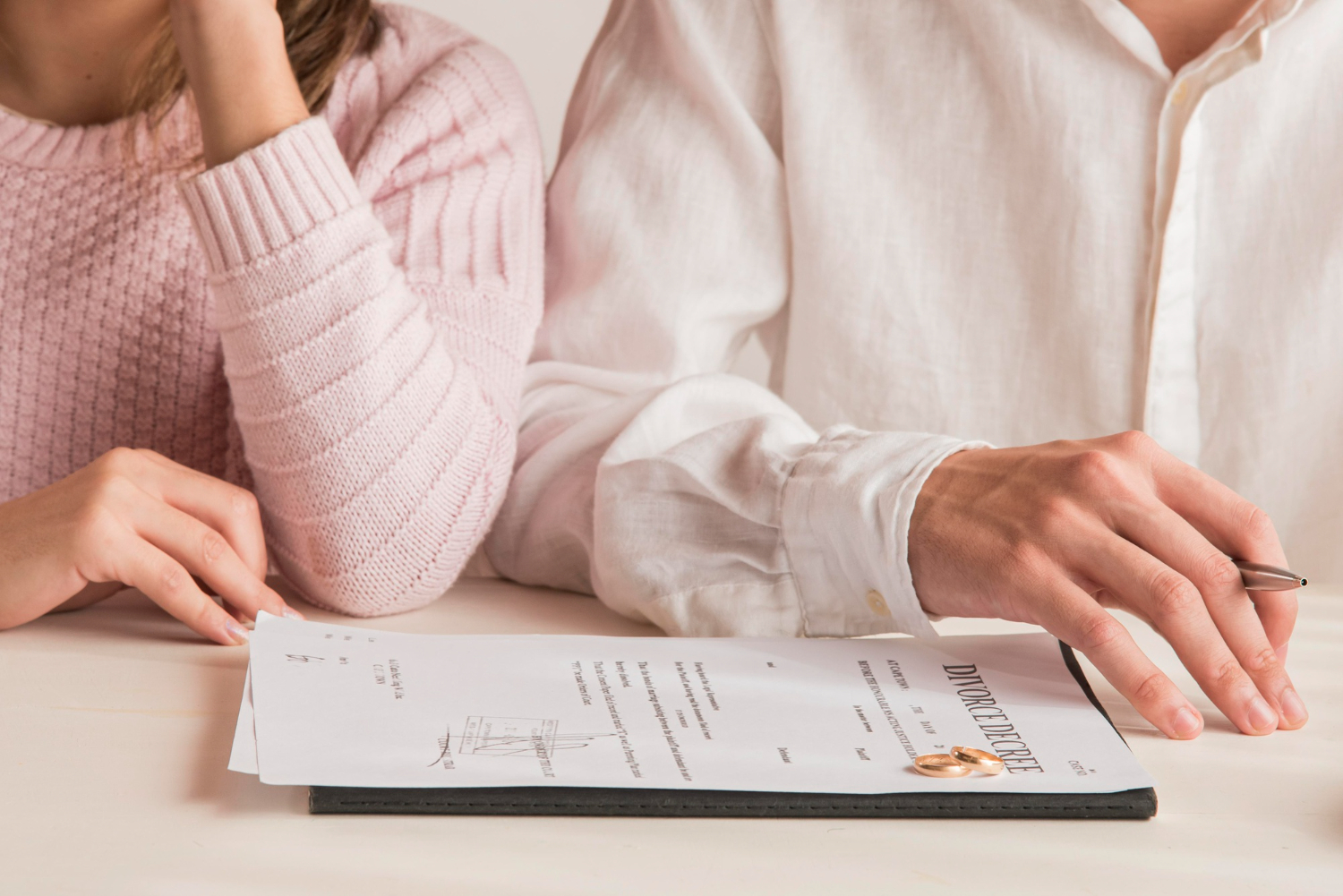
Choosing how to start a divorce can affect how much cooperation is required, whether formal service is necessary, and what happens if your spouse does not participate. For Ontario couples who agree that their marriage should end, a joint divorce application Ontario may provide a cooperative way to proceed. However, applying together is not always practical or appropriate. In other situations, one spouse may need to start the divorce independently and name the other spouse as the respondent.
At Zeidman Law, we help clients understand which divorce application process fits their circumstances before documents are filed. A joint divorce application Ontario is not simply a faster version of every divorce. It is designed for spouses who are applying together and agree on the divorce and any other orders they want the court to make by consent. When that level of cooperation is not available, a one-spouse application may be the more practical route.
What Is a Joint Divorce Application Ontario?
A joint divorce application Ontario is an application started by both spouses together. Under Ontario’s Family Law Rules, spouses may start a divorce case through a joint application with no respondent. This differs from an application started by one spouse, where the other spouse is formally named as the respondent. Ontario’s current family court guidance uses Form 8A: Application (Divorce) for a joint divorce application.
A joint divorce application Ontario generally works best when both spouses agree to obtain the divorce and have resolved their other family law matters. Ontario’s guidance states that a joint application is appropriate where both parties agree to a divorce and agree on other family law matters such as parenting time, decision-making responsibility, support, and property. This cooperative structure can reduce some procedural steps, but both spouses must remain willing to participate.
Both Spouses Apply Together
With a joint divorce application Ontario, both spouses are applicants rather than one person being an applicant and the other a respondent. Both participate in preparing and signing the application. Because there is no respondent in the joint proceeding, the normal step of formally serving one spouse with the initiating application is not required between the spouses.
Consent Is Essential
Ontario’s Family Law Rules state that in a joint application, the divorce and any other order sought must be made with the consent of both spouses. If the spouses still disagree about significant parenting, support, property, or other claims that they want a judge to decide, a joint divorce application Ontario may not be the appropriate procedure.
What Does a Sole Divorce Application Mean in Ontario?
People often use phrases such as “sole divorce application Ontario” to describe a divorce started by only one spouse. Ontario’s official family court materials generally call a divorce-only application started by one spouse a simple application. Form 8A is also used for this process when the only claim being made is divorce. The spouse who begins the case becomes the applicant, and the other spouse is named as the respondent.
The important point is that one spouse does not need the other spouse to agree to start the divorce proceeding. Unlike a joint divorce application Ontario, the applicant can prepare and file the application independently. The respondent must then be properly served and given an opportunity to respond. If no answer is filed and the divorce remains uncontested, the applicant can continue through the remaining divorce steps.
A Simple Application Is for Divorce Only
Ontario distinguishes a simple Form 8A application from a general Form 8 application. A simple application is used where the only claim is divorce. If the applicant is also asking the court to resolve contested parenting, support, property, or other family law issues, a general application may be required instead.
Your Spouse Becomes the Respondent
When one spouse starts the case alone, the other spouse is named as the respondent. This creates service and response requirements that do not arise in the same way with a joint divorce application Ontario.
Joint Divorce Application Ontario vs. Sole Filing: Key Differences
The main difference is not whether one form of divorce is more legitimate than the other. Both can ultimately result in a legally valid divorce. The difference is how the case begins and how much cooperation exists between the spouses. A joint divorce application Ontario is cooperative from the start, while a sole or simple divorce application allows one spouse to proceed without needing the other spouse to join the filing.
A joint divorce application Ontario also removes the need to serve the initiating divorce application on a respondent because there is no respondent. With a simple application, proper service is required, and the respondent receives a formal opportunity to answer. These procedural differences can influence which option is more convenient in a particular family.
| Issue | Joint Divorce Application | Sole or Simple Application |
|---|---|---|
| Who applies? | Both spouses | One spouse |
| Respondent? | No respondent | Other spouse is respondent |
| Main divorce form | Form 8A | Form 8A for divorce-only claim |
| Service on spouse | Generally not required between joint applicants | Required |
| Spousal cooperation | Required | Not required to start |
| Response period | No respondent answer process between applicants | Respondent may answer |
| Best suited for | Fully cooperative divorce | One spouse wants to proceed independently |
When a Joint Divorce Application Ontario May Be the Better Choice
A joint divorce application Ontario may be suitable when both spouses communicate reasonably well and are prepared to cooperate with the paperwork. They should agree that the marriage should legally end and should not require the court to decide contested claims as part of the joint filing. This can be particularly practical where a comprehensive separation agreement or previous court order has already addressed the important family issues.
Applying together can also make the procedural relationship clearer because neither spouse is formally positioned as the respondent. For some couples, that cooperative structure fits the way they have already handled their separation. However, choosing a joint divorce application Ontario should be based on genuine agreement and willingness to complete the process together rather than pressure to appear cooperative.
You Have Resolved the Main Family Issues
A joint application makes more sense when issues such as parenting time, decision-making responsibility, child support, spousal support, and property have already been resolved or are being included only on consent. If major disagreements remain, legal advice can help determine whether those matters should be settled first or addressed through another type of proceeding.
Both Spouses Are Willing to Participate
A joint divorce application Ontario depends on participation from both parties. If one spouse repeatedly delays signing documents, refuses to provide necessary information, or changes position about the divorce, the cooperative procedure may become impractical.
When Applying Alone May Be More Appropriate
A one-spouse application may make sense when you want to move forward with the divorce but your spouse does not want to participate in a joint filing. You do not need to persuade your spouse to become a joint applicant simply to begin a divorce case. Once the application is properly started and served, the respondent has the opportunity to respond according to Ontario’s court rules.
A sole filing may also be more practical when communication is difficult or when one spouse is unavailable to cooperate with documents. Unlike a joint divorce application Ontario, the simple application process does not depend on both spouses completing the application together. However, if additional contested family claims need to be decided, a simple divorce-only Form 8A may not be enough.
Lack of Cooperation Does Not Prevent Filing
One spouse generally cannot prevent the other from starting a divorce simply by refusing to sign a joint application. The applicant can choose the appropriate one-spouse process and arrange for formal service.
A Response Can Change the Process
If the respondent files an answer raising disputed claims, the case may no longer proceed as a straightforward uncontested divorce. Legal advice can help determine what documents and court steps are required if the case becomes contested.
Ontario Divorce Forms You Should Understand
The key form for both a simple divorce-only application and a joint divorce application Ontario is Form 8A: Application (Divorce). For a joint filing, Ontario’s current guidance says the form must be signed and dated by both spouses. Each spouse also completes their own Form 36: Affidavit for Divorce, and a Form 25A: Divorce Order is prepared for the court.
The court also normally requires the original marriage certificate before granting the divorce, unless the court accepts the explanation for why it cannot be obtained. Ontario also sends information to the federal Central Registry of Divorce Proceedings so the court can confirm that another divorce proceeding involving the same spouses has not already been started elsewhere in Canada.
Form 8A: Application (Divorce)
Form 8A is central to a joint divorce application Ontario and to a simple divorce-only filing started by one spouse. The way the parties are identified and how the case proceeds differs depending on whether the application is joint or started by one applicant.
Form 36 and Form 25A
Form 36 provides affidavit evidence supporting the request for divorce. Form 25A is the draft Divorce Order. In a joint application, each spouse completes their own Form 36. These documents help the court determine whether the legal requirements for granting the divorce have been met.
Service and Response Rules Matter
One of the clearest procedural differences between a joint divorce application Ontario and a one-spouse application is service. Because both spouses are applicants in a joint proceeding, one spouse does not need to serve the divorce application on the other as though they were opposing parties. Both are participating in the filing from the start.
When one spouse files alone, the initiating application must be properly served on the respondent. Ontario’s current Family Law Rules generally give a respondent 30 days after service to serve and file an answer when the application is served in Canada or the United States. If the application is served outside Canada or the United States, the response period is generally 60 days.
Joint Filing Avoids the Respondent Service Step
Removing the respondent service step can make a joint divorce application Ontario administratively simpler when both spouses are genuinely cooperative. It does not, however, eliminate the need to complete the required court documents correctly.
A Sole Filing Gives the Respondent Time to Answer
The response period protects the respondent’s opportunity to address the application and make their own claims where appropriate. If no answer is filed within the applicable time and other requirements are satisfied, the applicant may be able to continue with the uncontested divorce process.
Divorce Eligibility Is the Same for Both Application Types
Choosing a joint divorce application Ontario does not change Canada’s basic legal requirements for divorce. Under the Divorce Act, a court in a province generally has jurisdiction when either spouse has been habitually resident in that province for at least one year immediately before the divorce proceeding begins.
Canada has a no-fault divorce system. Marriage breakdown is the legal ground for divorce and can be established through one year of separation, adultery, or physical or mental cruelty. Most cooperative divorces rely on one year of separation. Justice Canada also confirms that spouses applying on the basis of separation can start the divorce process before the full year has passed, although the divorce generally cannot be granted until the one-year period has been completed.
One-Year Ontario Residency Requirement
The decision between a sole filing and a joint divorce application Ontario does not remove the jurisdiction requirement. Generally, at least one spouse must have lived in Ontario for the required one-year period immediately before the proceeding is started.
One-Year Separation Ground
Spouses do not necessarily need to wait until the first anniversary of separation to file when relying on separation as the ground for divorce. However, the court generally waits until the full separation period has been met before granting the divorce.
For official federal information about eligibility and grounds, see Justice Canada: How to Apply for a Divorce.
Checklist Before Choosing Your Application Type
The right filing method depends on cooperation, unresolved claims, and whether both parties are prepared to participate. Before choosing a joint divorce application Ontario, it is useful to look at the complete family situation rather than focusing only on whether both spouses want a divorce.
Consider these questions before filing:
- Do both spouses agree that they want the divorce?
- Have parenting issues been resolved?
- Has child support been addressed properly?
- Have spousal support issues been settled or waived with appropriate advice?
- Has property division been resolved?
- Is there a signed separation agreement?
- Are both spouses willing to complete and sign the necessary joint documents?
- Is either spouse likely to change position during the filing process?
- Are there additional claims that require a judge to decide a dispute?
- Is a simple divorce-only Form 8A actually appropriate for the case?
- Has the original marriage certificate been located?
- Has at least one spouse satisfied Ontario’s residency requirement?
Answering these questions can make it easier to determine whether applying together is practical or whether one spouse should start the proceeding independently.
What Happens After a Joint Application Is Filed?
After a joint divorce application Ontario and the required supporting documents are filed, the court reviews the materials. The Central Registry of Divorce Proceedings must also provide the required clearance information before the divorce can be granted. If the judge is satisfied that the legal requirements have been met, the court can issue the divorce order.
The divorce does not normally become effective on the same day the order is made. Ontario’s guidance states that the divorce order generally provides that the divorce becomes effective 31 days after the order was made. Once it becomes effective, either former spouse can request a certificate of divorce as official proof of the divorce date.
Court Review Still Applies
A joint divorce application Ontario is not automatically approved simply because both spouses signed it. The court must still be satisfied that the legal requirements for divorce have been met and that the required documents are complete.
What Happens After a Sole Application Is Filed?
With a simple one-spouse application, the applicant files the appropriate divorce materials and arranges proper service on the respondent. The respondent then receives the applicable period to file an answer. If the respondent does not answer and the case remains uncontested, the applicant can proceed with the affidavit evidence and draft divorce order required for the court’s review.
If the respondent files an answer, the next steps depend on what is being disputed. A case that began as a divorce-only application may require additional legal and procedural steps if the respondent introduces other family law claims. This is one important difference from a joint divorce application Ontario, where all relief requested through the joint filing must be on consent.
A Sole Application Can Still Become an Uncontested Divorce
Starting without your spouse as a joint applicant does not mean the case will necessarily become adversarial. Many simple applications remain uncontested because the respondent does not oppose the divorce.
Can You Use a Joint Application if You Have Children?
Having children does not automatically prevent spouses from using a joint divorce application Ontario. However, the spouses should have resolved their parenting and support issues if they are seeking a straightforward joint divorce. The court must also consider the child support requirements under the Divorce Act before granting the divorce.
Parents should not assume that an informal understanding about child support is enough simply because they both want the divorce. Parenting time, decision-making responsibility, child support, and special expenses should be reviewed carefully. A joint divorce application Ontario works best when these matters are clearly resolved and the court is not being asked to decide a dispute.
Child Support Must Be Properly Addressed
The court can examine whether reasonable arrangements have been made for the support of children of the marriage. Parents should make sure their arrangements are properly documented and consistent with applicable family law requirements.
Can You Apply Jointly if You Have a Separation Agreement?
A separation agreement often makes a joint divorce application Ontario more practical because many important issues may already have been resolved. A comprehensive agreement can address parenting, child support, spousal support, property, debts, the matrimonial home, and other matters arising from separation.
However, the existence of an agreement does not mean couples should automatically select a joint filing. Both spouses must still be willing to participate and consent to the orders requested through the joint process. The agreement should also be reviewed to ensure that no unresolved claims or procedural concerns remain before the divorce application is prepared.
Review the Agreement Before Filing
A lawyer can confirm whether the separation agreement addresses the issues that might otherwise complicate the divorce. This review can help determine whether a joint divorce application Ontario is appropriate or whether another filing strategy is preferable.
Common Mistakes When Choosing an Application Type
A frequent mistake is assuming that “uncontested” and “joint” mean exactly the same thing. They do not. A divorce can be uncontested even when only one spouse filed the application. The key distinction is whether both spouses are applicants or whether one spouse is an applicant and the other is a respondent.
Another mistake is using a simple Form 8A divorce-only application when unresolved claims actually need to be decided by the court. A joint divorce application Ontario also should not be used simply to avoid service when the spouses do not genuinely agree about the orders being requested. Choosing the correct procedure at the beginning can reduce corrections and delays later.
Do Not Confuse Joint With Uncontested
A joint case starts with both spouses applying together. A sole case can still become uncontested if the respondent does not oppose the divorce.
Do Not Ignore Other Family Law Claims
If parenting, support, or property disputes still require court orders, the correct application may be different from a simple divorce-only filing. Legal review can help identify the appropriate path.
For current Ontario filing guidance, see Ontario: Steps to Filing an Application. Ontario’s guidance confirms the documents required for both simple and joint divorce applications.
Why Choose Zeidman Law
Zeidman Law helps Ontario spouses understand the divorce process before they commit to a particular filing strategy. If you are considering a joint divorce application Ontario, we can review whether the necessary family law issues have been resolved, explain the required forms, and identify concerns that could affect the application. If joint filing is not practical, we can explain the alternatives available through a one-spouse application.
Our Divorce Lawyer and Uncontested Divorce services can assist clients at different stages of separation and divorce. We focus on clear guidance, accurate document preparation, and practical solutions. Whether you and your spouse are applying together or you need to proceed independently, Zeidman Law can help you understand the legal requirements and choose a process suited to your circumstances.
Choosing the Right Divorce Application for Your Situation
There is no single application type that is best for every Ontario couple. A joint divorce application Ontario can work well when spouses are cooperative, have resolved their family law matters, and are prepared to complete the divorce documents together. A simple one-spouse application may be better when only one spouse wants to take responsibility for moving the divorce forward or when the other spouse will not cooperate with a joint filing.
Before filing, make sure you understand whether the divorce is truly the only outstanding claim, whether service will be required, and whether your parenting, support, and property matters have been addressed. Zeidman Law can review your circumstances and help you determine which divorce application process is appropriate. To discuss your options, book a free consultation or call 905-669-7577.
Frequently Asked Questions
The distinction between joint and sole filing often causes confusion because both processes can lead to an uncontested divorce. The correct option depends mainly on who is applying, whether both spouses consent to the requested orders, and whether other disputed family law claims remain.
The following answers address common questions about a joint divorce application Ontario and one-spouse divorce filings. Individual circumstances can affect the correct procedure, so legal review may be useful before documents are submitted.
1. What is a joint divorce application Ontario?
A joint divorce application Ontario is a divorce proceeding started by both spouses together. Both spouses are applicants, there is no respondent, and any divorce or other order requested through the joint application must be sought with both spouses’ consent.
2. Is a joint divorce application Ontario the same as an uncontested divorce?
Not exactly. A joint application is filed by both spouses together, while an uncontested divorce simply means the divorce is not being opposed or disputed. A one-spouse simple application can also proceed uncontested if the respondent does not file an answer.
3. Does a joint divorce application Ontario require service on my spouse?
Generally, no service between the spouses is required because both spouses are applicants in the proceeding. In a one-spouse application, the other spouse is the respondent and must generally be properly served.
4. What form is used for a joint divorce application Ontario?
Ontario currently uses Form 8A: Application (Divorce) for both joint divorce applications and simple divorce-only applications started by one spouse. Joint applicants must both participate in completing and signing the joint application, and each spouse completes their own Form 36 affidavit.
5. What if my spouse refuses to file jointly?
You do not generally need your spouse’s agreement to start your own divorce application. If a joint divorce application Ontario is not possible because your spouse will not participate, you may be able to start the appropriate one-spouse application and formally serve your spouse.
6. Can we file a joint divorce application Ontario if we disagree about property or support?
A joint application is generally intended for spouses who agree on the divorce and the other orders being requested. If significant property, parenting, or support disputes require a judge to decide contested claims, another application process may be necessary.
7. Which is better, a joint divorce application Ontario or a sole application?
Neither is automatically better. A joint divorce application Ontario may be convenient for cooperative spouses who have resolved their family law issues, while a sole application may be more appropriate when one spouse needs to proceed independently. Zeidman Law can review the circumstances and explain which option may fit.

