

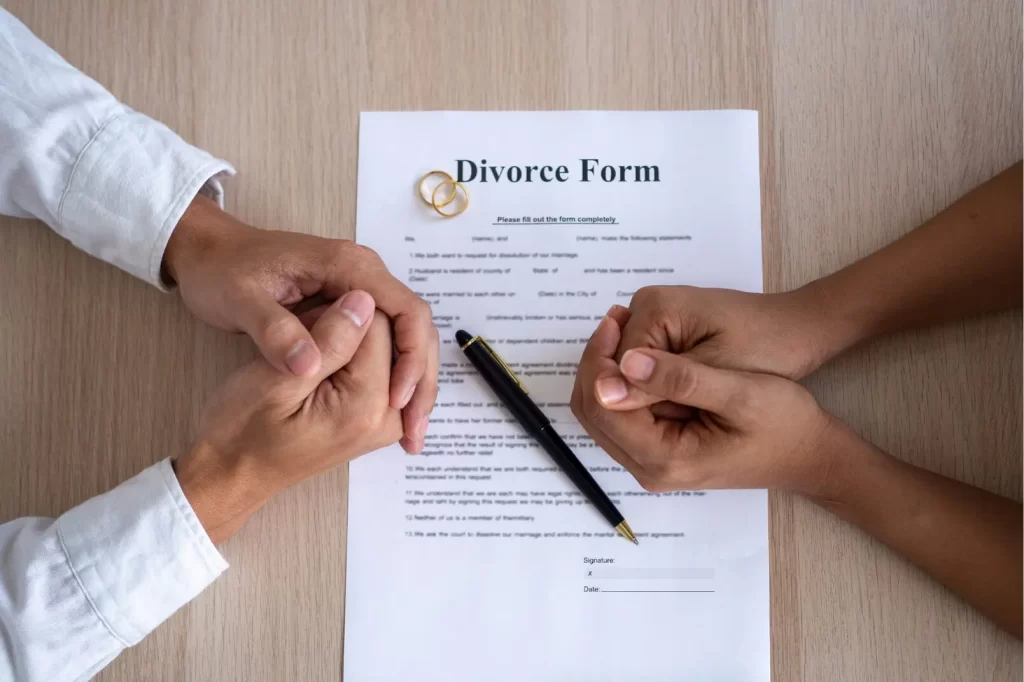
Divorce in Ontario involves more than simply completing a form and submitting it to the court. North York residents need to understand the legal requirements, choose the appropriate type of divorce application, gather supporting documents, follow service rules where required, and complete the court process before a divorce becomes effective. Understanding each stage in advance can make the process easier to follow and help avoid common filing mistakes.
Understanding Divorce in Ontario Before You File
Before starting a divorce application, it is important to understand what legally ends a marriage and what issues may need to be dealt with separately. Under Canada’s Divorce Act, marriage breakdown is the only legal ground for divorce. Marriage breakdown can generally be established when spouses have lived separate and apart for at least one year, or in certain circumstances involving adultery or physical or mental cruelty. For many couples, separation for one year is the most common basis for applying for divorce.
Divorce and separation are not the same thing. A couple can be separated without being legally divorced, and spouses may resolve issues such as parenting, child support, spousal support, and property division before the divorce is finalized. The divorce itself formally ends the marriage, but it does not automatically resolve every financial or parenting issue between the spouses. Understanding what has already been agreed upon and what remains unresolved is therefore an important first step.
Confirm That You Meet the Basic Requirements
Before filing, you should confirm that you are legally married and that you meet the residency requirements for starting a divorce proceeding in Ontario. Generally, either you or your spouse must have been habitually resident in Ontario for at least one year immediately before starting the proceeding. If you are relying on separation as the basis for divorce, you should also be able to identify the date when the separation began.
The separation date can be particularly important because the court generally cannot grant a divorce based on one year of separation until that required period has passed. In some circumstances, spouses may continue living in the same home while being separated, but the facts must support that they were actually living separate and apart. Because separation can involve circumstances that are not always straightforward, understanding the legal requirements before filing can help prevent problems later in the process.
For North York residents who are reviewing their circumstances before beginning the process, working with a Divorce Law Firm Etobicoke can also provide information about the broader Ontario family law process and the issues that may need to be considered alongside a divorce.
Decide Which Type of Divorce Application You Need
The next step is determining whether you will file a sole application or a joint application. A sole application is started by one spouse, with the other spouse being named as the respondent. A joint application is filed by both spouses together when they are jointly asking the court for a divorce and any other orders included in the application.
The choice can affect how the case proceeds. In a joint application, both spouses participate as applicants, so the service requirements that apply when one spouse starts a proceeding against the other generally do not apply in the same way. If you and your spouse disagree about important issues, the application may also need to address those disputes. Choosing the correct type of application at the beginning can help ensure that the court file accurately reflects the circumstances.
Preparing the Documents for Your Divorce Application
Preparing the required documents is one of the most important stages of the Ontario divorce process. The forms submitted to the court must contain accurate information about the spouses, the marriage, the separation, and any other orders being requested. Supporting documents must also be provided where required. An incomplete application or missing document can result in delays and may require corrections before the matter can proceed.
It is useful to gather your documents before beginning the online or court filing process. Check the spelling of both spouses’ names, the date and place of marriage, the date of separation, and other information carefully. If there are children, support obligations, property issues, or existing court orders, those matters should also be reviewed so you understand whether they need to be addressed as part of the broader family law proceeding.
Gather the Required Forms and Documents
For a simple divorce application in Ontario, the required materials generally include Form 8A, Application, the Continuing Record, and the original marriage certificate or marriage registration certificate. Additional documents may be required depending on the circumstances and the type of application being filed.
If you are filing jointly, additional documents may be required, including affidavits for divorce and a draft divorce order. The documents required can also change depending on whether you are asking the court to make orders concerning support, parenting, property, or other family law matters.
Before filing, it can be helpful to work through a basic checklist:
Marriage certificate or marriage registration certificate: This is an important document in a divorce application and should be obtained before filing whenever possible.
Appropriate divorce application: The correct form depends on whether you are filing a simple divorce, joint divorce, or another type of family law application.
Continuing Record and supporting documents: These documents become part of the court file and must be prepared according to the applicable court rules.
Additional family law documents: Financial, parenting, support, or property documents may be required depending on the claims being made.
If the marriage took place outside Canada, additional requirements may apply. A foreign marriage certificate may need to be translated if it is not in English or French, and the court may require supporting information concerning the validity of the marriage. It is therefore important not to assume that every divorce application will require exactly the same documents.
Determine Where and How to File
Once your documents are ready, you need to determine the appropriate court location and filing method. Ontario permits many family court documents to be filed electronically, although the exact requirements can depend on the type of application and the court location. You should make sure the documents are filed according to the current court procedures applicable to your case.
North York residents should pay particular attention to selecting the appropriate court location and following the filing instructions carefully. Court procedures can change, and a document that is incomplete or filed incorrectly may need to be corrected. If you are uncertain about the forms or the type of application you should use, getting legal information before filing may help you avoid unnecessary procedural problems.
For those dealing with additional family law concerns at the same time, our north york family law firm information can help you understand the broader legal issues that may arise during separation and divorce.
Filing and Serving the Divorce Application
Once the appropriate documents have been completed, the next stage is filing the application with the court. Filing officially starts the court proceeding. The procedure after filing depends largely on whether the application is joint or whether one spouse is bringing the proceeding against the other.
If you are filing a sole application, the respondent generally needs to be properly served with the issued court documents. Service gives the respondent formal notice of the proceeding and an opportunity to respond. Following the correct service rules is essential because an improperly served application can create delays and may prevent the case from moving forward as expected.
File the Divorce Application With the Court
When you file your application, you must submit the required forms and supporting documents in accordance with the applicable court requirements. Once the application is issued, the court file is created and the matter can proceed to the next stage. Depending on the type of application, you may also have to complete additional procedural requirements.
Court filing fees may apply. Ontario also has a process for eligible individuals who cannot afford court fees and wish to apply for a fee waiver. It is important to review the current court requirements before filing because the documents and procedures can vary depending on the type of divorce application.
When completing the forms, review all dates and personal information carefully. An incorrect separation date, spelling error, incomplete address, or missing information may require correction. Taking additional time to check the application before filing can make the later stages more straightforward.
Serve the Other Spouse When Required
If you are starting a sole divorce application, the respondent generally needs to be served with the issued documents according to the applicable Family Law Rules. The applicant usually cannot personally serve the documents in circumstances where special service is required. The person completing service must meet the applicable requirements, and proof of service must later be filed with the court.
After being served, the respondent generally has 30 calendar days to serve and file an answer if the documents were served in Canada or the United States. A longer response period can apply when service takes place outside Canada or the United States. The respondent’s response can affect how the proceeding continues, particularly if there are disagreements about the divorce or other family law issues.
What Happens After Filing for Divorce in Ontario?
After filing and completing service where required, the case moves through the remaining court procedures. The exact steps can depend on whether the divorce is joint, uncontested, or contested. The court also needs to be satisfied that the legal requirements for granting the divorce have been met and that the required documentation has been properly completed.
The Ontario divorce process may be relatively straightforward when both spouses agree and there are no significant unresolved issues. However, matters involving children, support, property, or disagreement between spouses can require additional steps. A divorce application should therefore be considered as part of the broader family law situation rather than as an isolated form filing.
Understand the Divorce Timeline
The timeline for Divorce in Ontario varies depending on the circumstances. When a person relies on one year of separation, the divorce generally cannot be granted until the required one year separation period has been completed. However, the application may be started before the one year period is complete in appropriate circumstances, with the divorce only being granted after the legal requirement has been satisfied.
Court processing time can also vary. A complete joint application with no disputed issues may proceed differently from a sole application where the respondent files an answer or disputes other claims. Missing documents, service problems, incomplete forms, or unresolved issues can also contribute to delays.
It is therefore difficult to provide one exact timeline for every divorce. Instead, the overall timing should be considered in terms of the separation requirement, document preparation, filing, service, response periods, court review, and the issuance of the final divorce order.
Receive the Divorce Order and Certificate
If the court grants the divorce, a divorce order is issued. The divorce does not generally become effective immediately on the date the judge makes the order. In Ontario, the divorce generally takes effect 31 days after the divorce order is made.
Once the divorce becomes effective, a divorce certificate can be requested as official proof of the divorce and its effective date. This certificate may be required for certain administrative or legal purposes, including situations where a person plans to remarry.
For spouses who agree on the relevant issues, an Uncontested Divorce may offer a more straightforward route through the court process. Even when both spouses agree, however, the required forms, supporting documents, and court procedures still need to be completed properly.
Issues to Resolve Alongside Your Divorce
Filing for divorce does not automatically settle every issue that arose during the marriage. Many couples also need to address parenting arrangements, child support, spousal support, property division, debts, pensions, and other financial matters. These issues can sometimes be resolved through an agreement, while disagreements may require additional court involvement.
It is important to understand which issues have already been resolved and which remain outstanding before finalizing the divorce. A couple may agree on the divorce itself while still disagreeing about financial or parenting matters. Those unresolved issues can have a significant effect on the overall family law process and should not be overlooked simply because a divorce application has been started.
Review Parenting and Support Matters
Where children are involved, parents may need to establish arrangements concerning parenting time, decision making responsibility, child support, and other matters affecting the children’s day to day lives. These arrangements should be considered based on the children’s best interests and the applicable family law requirements.
Financial issues may also include child support, spousal support, property division, and responsibility for debts. The appropriate approach depends on the individual circumstances. If these matters have not been resolved, it may be necessary to address them through a separation agreement, consent arrangement, or court proceeding rather than assuming they will automatically be resolved through the divorce itself.
A person who wants to understand how these issues may affect the divorce process can consider a Family law consultation before deciding how to proceed.
Organise Your Court and Legal Records
Keeping your documents organized throughout the divorce process can make it easier to track what has been filed, what remains outstanding, and what deadlines may apply. Divorce proceedings can generate several documents, including applications, affidavits, proof of service, court orders, financial documents, correspondence, and agreements.
A simple record keeping system can include:
Your marriage certificate and copies of important identification and marriage documents.
Copies of every court form that has been filed or issued.
Proof of service and any response received from the other spouse.
Copies of court orders, separation agreements, and related documents.
Financial and parenting records that may be relevant to unresolved family law issues.
Maintaining these records can also be useful after the divorce has been finalized. Some documents may need to be referred to later when dealing with support, parenting arrangements, property matters, or other legal and administrative issues.
Common Mistakes to Avoid When Filing for Divorce
Although the basic steps involved in filing for divorce may appear straightforward, procedural mistakes can cause delays. One common problem is submitting an incomplete application or using a form that does not match the type of proceeding. Other problems can arise when supporting documents are missing, the marriage certificate cannot be provided, or service on the respondent is not completed correctly.
Another mistake is assuming that agreement between spouses means no court procedure is necessary. Even where both spouses agree to the divorce, the appropriate application must still be filed and the court must be satisfied that the legal requirements have been met. A joint or uncontested matter can be less complicated than a contested case, but it still requires careful preparation.
Check Your Application Before Filing
Before submitting the application, review every section carefully. Confirm the names of both spouses, the date and location of the marriage, the separation date, residency information, and the orders being requested. Make sure that supporting documents are included and that the information is consistent throughout the application.
You should also review whether there are existing court orders or agreements dealing with parenting, support, or property. If there are unresolved issues, make sure you understand whether they need to be included in the proceeding or addressed separately. A careful review at the beginning can help prevent avoidable corrections later.
Understand When Legal Guidance May Help
Some divorces are relatively straightforward, particularly when both spouses agree on the divorce and have already resolved the relevant family law issues. Other situations can be significantly more complicated when there are disagreements about children, support, property, financial disclosure, or the date of separation.
At Zeidman Law Offices, we understand that filing for divorce can involve both procedural requirements and broader family law concerns. If you need to review your circumstances before proceeding, information about a divorce lawyer in vaughan ontario can help you understand the legal considerations that may apply to your situation.
Conclusion
Filing for Divorce in Ontario involves several stages, from confirming eligibility and choosing the appropriate application to preparing documents, filing with the court, completing service where required, and obtaining the divorce order. For North York residents, understanding these stages in advance can make the process easier to follow and reduce the risk of avoidable procedural delays.
The Ontario divorce process can differ depending on whether the application is joint, sole, uncontested, or contested. The one year separation requirement is particularly important for spouses relying on separation as the basis for divorce, while other grounds may apply in specific circumstances. Parenting, support, and property issues should also be reviewed separately because obtaining a divorce does not automatically resolve every issue between former spouses.
At Zeidman Law Offices, we recognize that every divorce has its own circumstances. Understanding the required documents, filing procedures, service requirements, timelines, and related family law issues can help you approach the process with greater clarity and make informed decisions about the next steps.
FAQs
How do I apply for divorce in Ontario?
You generally need to complete the appropriate divorce application, prepare the required supporting documents, file the application with the appropriate court, and follow the applicable service and court procedures.
How long does Divorce in Ontario take?
The timeline depends on the circumstances. If you are relying on one year of separation, the divorce generally cannot be granted until that period has been completed. Court processing times can also vary.
Do I need my marriage certificate to file for divorce?
Ontario generally requires the original marriage certificate or marriage registration certificate before a divorce can be granted, subject to limited exceptions.
Can my spouse and I file for divorce together?
Yes. Ontario allows spouses to file a joint divorce application when both spouses are applying together and agree on the orders being requested.
When does a divorce become effective in Ontario?
When a judge grants the divorce, it generally becomes effective 31 days after the divorce order is made. A divorce certificate can then be requested as proof of the effective date.

